Tuesday, August 28, 2012
Common College Foot Problems
You have just dropped off your kid at college. You are looking forward to their next visit home to see the changes that have occured with the next step in their life. However, you are not looking forward to some of the problems they can bring back from college, such as athlete's foot infections, warts or even fungal toenails. With co-ed dorms and large numbers of students living together these problems can be easily spread from person to person. here are some helpful tips to keep your college student healthy.
Wear flip flops in the shower. Warts are caused by a virus and can be easily transmitted in the shower. This virus is spread from person to person through even a small puncture area on the foot. The virus develops an elevated lesion anywhere on the body. These lesions have small black dots and can be very painful especially if they are squeezed form side to side. Viruses are difficult to eradicate but can be treated. Warts are more difficult to treat on the feet than the hands. Those found on the bottom of the foot are called plantar warts. Over the counter treatment tend not to be effective on the bottom of the foot because of the thickness of the skin and because we walk on the soles of our feet so they get pushed inward.
Don't share shoes. Fungus is found in shoes. The fungus likes the dark moist environment. By sharing shoes you can develop a fungal skin infection, called athlete's foot or tinea pedis. Or the fungus can get underneath the nail causing a fungal toenail, called onychomycosis. The treatment can be difficult because the medication needs to be able to penetrate the nail to kill the fungus within the nail, as well as under the nail. There are some effective topical treatment options, oral medication and laser treatments.
No barefoot walking. College dorms are not always the cleanest. Make sure your child wears shoes to prevent foreign bodies in the bottom of the foot. These can easily get infected, so early treatment is essential.
These are some simple tips to prevent your student from returning with more than just an education.
Dr. "Sandie" Grulke
http://www.podiatrycarespecialists.com/
Tuesday, April 24, 2012
Mani and Pedi, Please ?
I have alot of patients ask me, "Can I please get a pedicure?" Sure it feels great to get your feet and hands pampered. And truth be told I get a mani and pedi, about once a year for special occasions. It is vital you make sure the establishment you are going to is clean; in the way they handle their instruments, chairs, tubs (whirlpools), etc. There are some patients who should not get this done especially patients with diabetes, numbness into their feet and hands, poor circulations or open wounds. However, there are some hidden dangers from manicures and pedicures for even those of us who do not have these systemic problems.
In a recent article from Fox News (http://latino.foxnews.com/latino/health/2012/04/24/gel-manicure-could-lead-to-cancer-doctors-say/?cmpid=cmty_{linkBack}_Gel_Manicure_Could_Lead_to_Cancer%2C_Doctors_Say) the UV light used in gel manicures have been linked to skin cancer. The UV light is the same light used in tanning beds which are known causes of cancer in indivuals. The UV light is used to make the gel nails harden and shine. However, over time the harmful rays may cause skin cancer. Make sure to put a sunscreen on your hands or feet prior to using the UV light.
In another article published recently (http://news.oneindia.in/2008/06/15/pedicures-harm-good-1213517160.html) Tracey Vlahovic DPM, a classmate of mine, explains the concerns of developing not only nail fungus from unclean instruments but bacterial infections from unsterilized instruments. This can reult in fungal nail and skin infection, ingrown toenails or cellulitis, a bacterial infection of the skin.
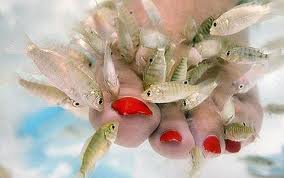
A new fad is the fish pedicure. You feet are placed in a tank with skin eating carp. They gently clean the dead skin off your feet. This is not allowed in certained areas of the country because of the concern of spreading diseases. The fish can spread diseases such as Hepatitis and HIV, especially in patients that are immunocompromised.
The best advice is to use your own clean instruments. Use a vitmain enriched antifungal nail polish to add some color to you toes. Nail polishes, such as Dr. Remedy TM which comes in a variety of colors, uses tea tree oil as a natural antifunal component to prevent fungus nails. Simple care of your feet including using a pumice stone and an urea based cream to help soften calluses or hard skin after a shower or bath can prevent the need for pedicures. They are just not worth the risks.
Dr. "Sandie" Grulke
http://www.podiatrycarespecialists.com/
Tuesday, April 17, 2012
Treatments for Nail Fungus
With the weather getting warmer and summer approaching, we kick off our boots and shoes for warm weather footwear. The flip flops, sandals and bare feet are making a comeback. BUT don't let fungal toenails stop you from enjoying the approaching summer weather. Fungal toenails, also known as onychomycosis, is a fungal infection under the nail and in the nail bed. The fungus lives in everyone's shoes likes the dark moist environment. Simple dropping something on your foot or the nail lifting up because they are too long, can allow the nail fungus to get under the nail and infect it. Unforntunately, it is easy to get and difficult to get rid of. Despite this, there are several different treatment options available.
The oral medication which is the most effective can have liver side effects. The liver must be tested prior to usage of the oral medications and during treatment. The oral medications include Giseofulving, Lamisil and Sporanox. For this reason, the oral medication is not always the first line of treatment.
The topical medications can be effective and safe alternatives to the oral medications. However, just any antifungal cream will not work because it has to be able to penetrate throught the nail plate in order to destroy the nail fungus.
One active ingredient to look for in a topical treatment is Tolnaftate, an antifungal drug. It has been placed in an oil based solution which allows the medication to penetrate through the nail unlike other over the counter preparations which are either water or alcohol based.
![]() |
| Tea Tree |
Other ingredients in treating onychomycosis are tea tree oil, Vick's VapoRub TM and vinegar. Tea Tree Oil is a natural antifungal agent that in the right formulation can rid the fungal infection. Camphor is the main ingredient of Vick's VapoRub TM. There are three major fungal species responsible for causing fungal infections and camphor has been shown to be effective in one of these three infections. Vingear, also known as acetic acid, changes the pH of the toenail and can kill the fungus under the nail. It is reported to have good nail penetration but be careful with this ingredient as it is an acid and can be corrosive.
Laser treatments are also being used for nail fungus. Certain laser companies have been FDA approved for short term resolution of nail fungus. Unfortunately, most insurance companies are not covering this procedure and it be costly.
As with all treatments, the treatment for nail fungus can take many months. Be patient. These treatments can be effective but they can take 6-12 months of treatment. Also for successful treatment treat your shoes with an antifungal spray to reduce the amount of fungus to prevent reinfection.
Dr. "Sandie" Grulke
http://www.podiatrycarespecialists.com/
Monday, March 5, 2012
Ingrown Toe Nails in West Chester, PA?
http://www.podiatrycarespecialists.com/
Subscribe to:
Posts (Atom)